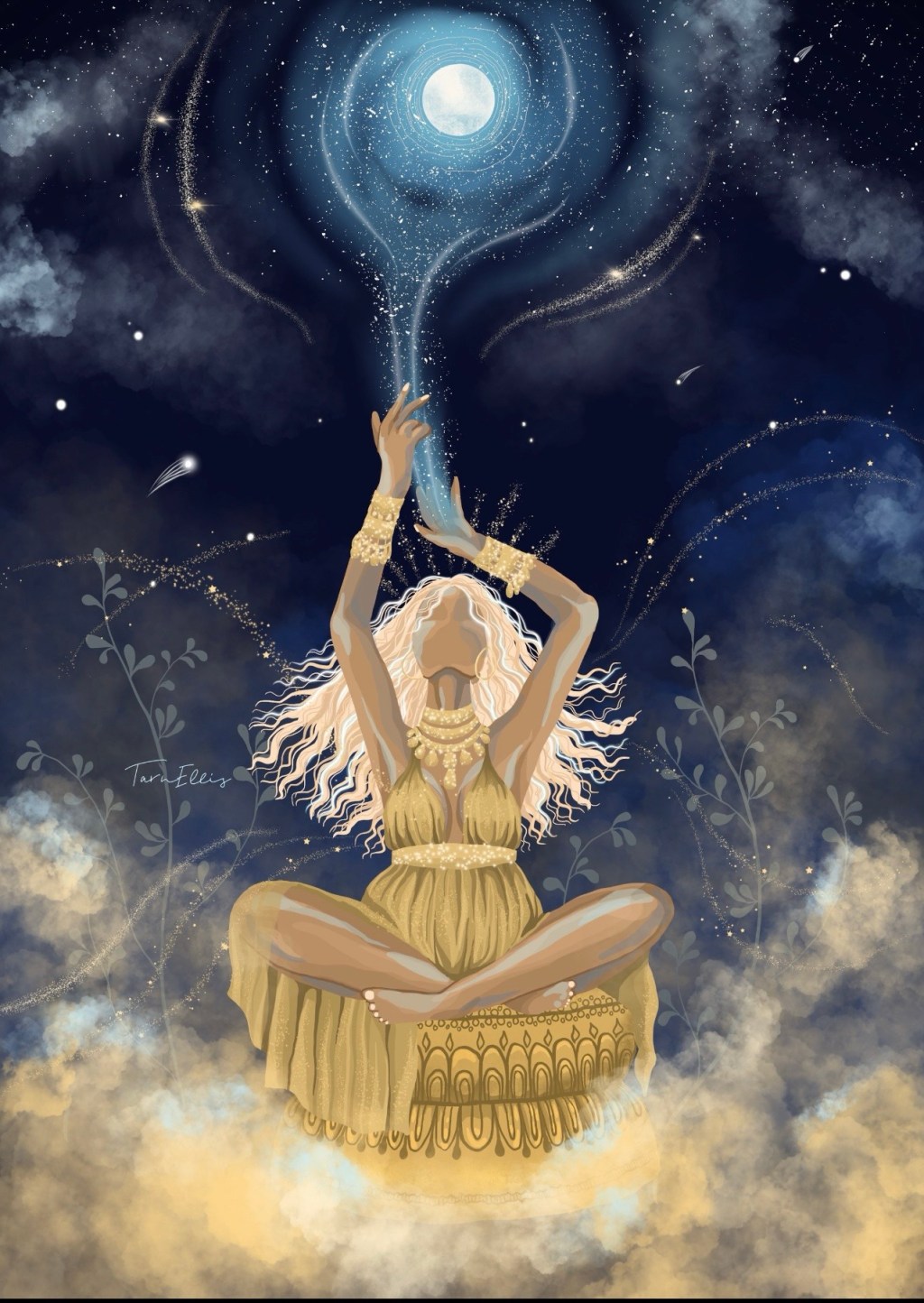
Throughout history, the moon has held powerful symbolic meaning in many cultures. Its constant cycle of transformation—growing, shining fully, fading, and beginning again—has long been seen as a reflection of life itself.
Across civilizations, the moon has often represented intuition, feminine energy, mystery, and renewal.
The Moon in Ancient Egypt
In ancient Egyptian belief systems, the moon was associated with the god Thoth, who represented wisdom, writing, and knowledge. The moon was believed to illuminate hidden truths and guide spiritual understanding.
Moon cycles were also connected with timekeeping and sacred rituals within Egyptian temples.
The Moon in Greek and Roman Traditions
In Greek mythology, the moon was associated with the goddess Selene, who was believed to travel across the night sky in a silver chariot. Later traditions connected the moon with Artemis and Hecate, figures linked to nature, intuition, and the unseen world.
The moon became a powerful symbol of the mysterious and reflective aspects of human life.
The Moon in Eastern Traditions
In many Eastern traditions, the moon symbolises balance, harmony, and inner peace. In Chinese culture, the moon is celebrated during the Mid-Autumn Festival, a time associated with gratitude, unity, and reflection.
The moon is often seen as a reminder that life moves through natural cycles of change.
A Shared Human Symbol
Despite cultural differences, the moon appears again and again as a symbol of reflection and transformation. Its quiet presence in the night sky has inspired countless stories, myths, and spiritual traditions.
Even today, when we look up at the moon, we are connecting with something that humans have observed and honoured for thousands of years.
It remains a symbol of mystery, calm, and the gentle rhythm of life.
Article written by:
DivineGuidance.uk
Love & Light
✨🌙💫✨


Leave a comment