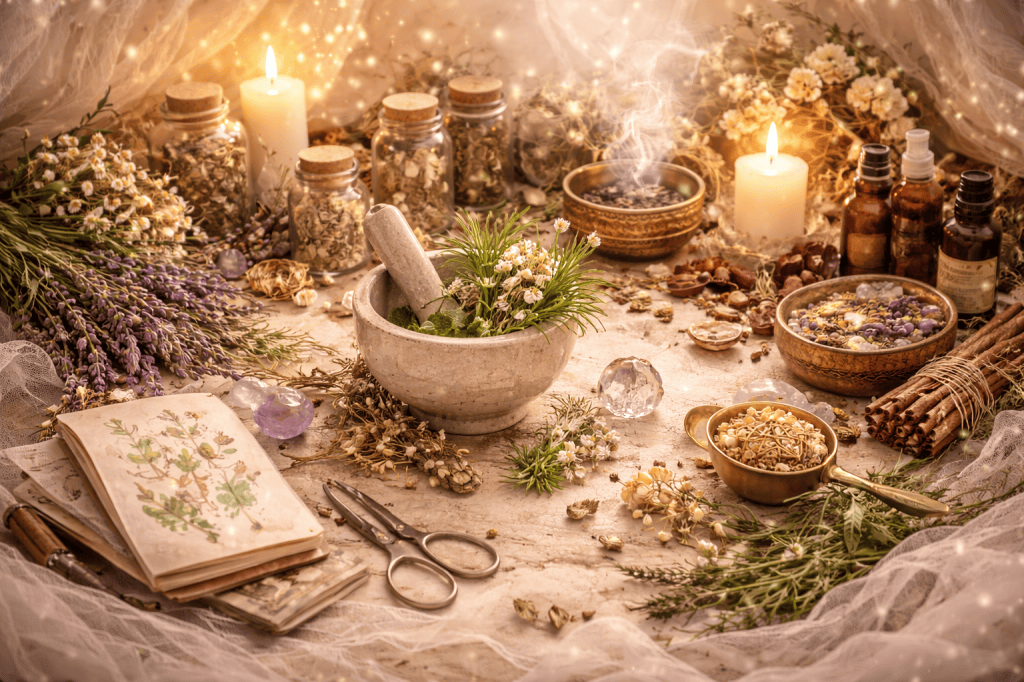
For thousands of years, human beings have turned to the natural world for healing, guidance, and spiritual connection. Long before modern medicine and scientific study, plants were understood not only for their physical properties but also for their symbolic and energetic qualities. This ancient relationship with plants is known as herbalism.
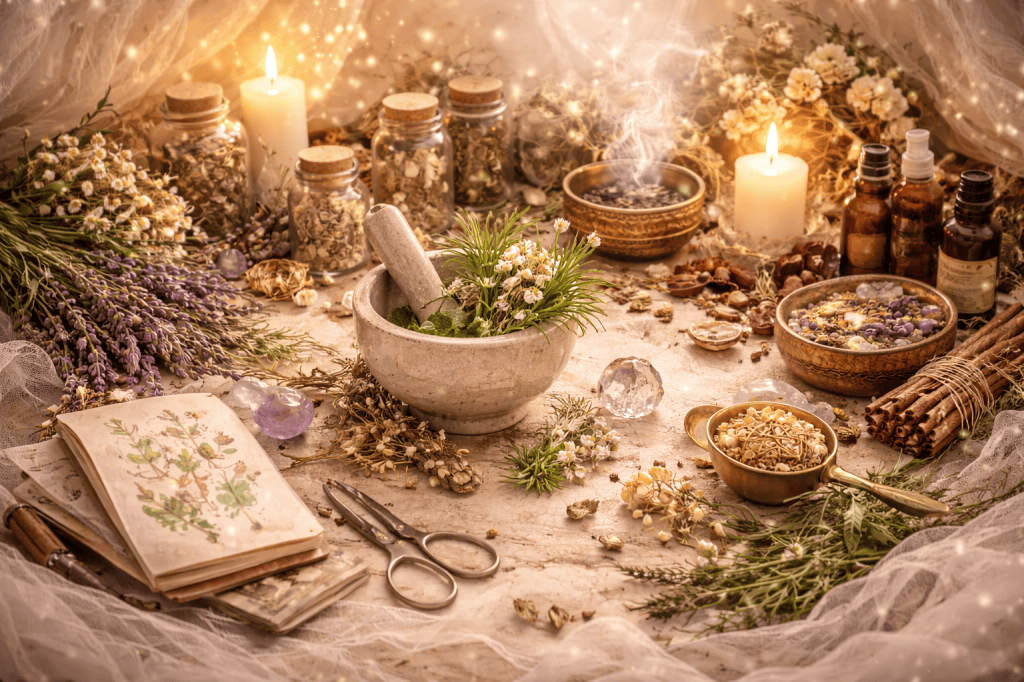
Herbalism is one of the oldest healing traditions in the world. Across many cultures—from ancient Egypt and Greece to China, India, and Europe—plants were used to support health, balance emotions, and bring harmony between the body, mind, and spirit.
Alongside herbal practices, many cultures also developed seasonal rituals, honouring the changing cycles of nature and recognising how these shifts influence human life.
Together, herbalism and seasonal rituals remind us that we are deeply connected to the rhythms of the earth.
The Ancient Wisdom of Herbalism
Herbalism is the practice of using plants for healing and wellbeing. Traditional herbalists studied the leaves, roots, flowers, and seeds of plants to understand their properties and how they could support the body.
Many plants that were once used in ancient traditions are still valued today, such as:
Lavender, known for its calming and soothing qualities Chamomile, often used to support relaxation and sleep Rose, associated with emotional healing and heart energy Mint, used to refresh and stimulate the senses Sage and rosemary, often linked with cleansing and clarity
In traditional cultures, herbal knowledge was usually passed down through generations. Healers, midwives, and herbalists would gather plants during specific seasons, believing that the timing of harvest could influence the plant’s strength and energy.
Herbalism was not only about physical healing but also about understanding the deeper relationship between humans and nature.
The Meaning of Seasonal Rituals
Seasonal rituals are practices that honour the changing cycles of the earth. Many ancient cultures observed the natural rhythms of the year through ceremonies, festivals, and simple rituals connected to the seasons.
These rituals often celebrated:
The return of light in spring The abundance of summer The harvest and reflection of autumn The quiet rest and renewal of winter
For example, spring rituals often focused on new beginnings, growth, and planting seeds—both literally and symbolically. Autumn traditions were connected to gratitude, harvest, and preparing for the darker months.
These practices helped communities stay connected to the natural world and reminded people that life moves in cycles of growth, rest, and renewal.
Plants and Ritual in Spiritual Traditions
Plants have long played an important role in spiritual rituals. Flowers, herbs, and leaves were often used in ceremonies, offerings, and sacred spaces.
For example:
Rose petals have been used in rituals connected to love, compassion, and emotional healing. Lavender has traditionally been associated with peace, calm, and spiritual cleansing. Mugwort has historically been linked to dreams, intuition, and protective rituals. Rosemary has been used for remembrance, protection, and clarity.
In many traditions, working with plants was seen as a way to deepen awareness and create a sacred connection with nature.
Returning to the Natural Rhythm
In modern life, it can be easy to feel disconnected from nature’s rhythms. However, herbal practices and seasonal rituals offer gentle ways to reconnect with the natural world.
Simple practices such as brewing herbal teas, spending time outdoors, or acknowledging seasonal changes can create moments of reflection and grounding.
These traditions remind us that nature is constantly moving through cycles of growth, rest, transformation, and renewal—and that human life follows these rhythms as well.
A Tradition That Continues
Today, herbalism is once again gaining interest as people rediscover the value of natural practices and traditional wisdom. While modern science continues to study the properties of plants, many people also appreciate the symbolic and reflective aspects of herbal traditions.
Seasonal rituals and herbal practices invite us to slow down, observe the world around us, and reconnect with something ancient and deeply human: our relationship with the earth.
In this way, herbalism is not only a tradition of healing plants—it is also a reminder that we are part of a living, breathing natural world.
Article written by :
DivineGuidance.uk
💫🌙✨


Leave a comment